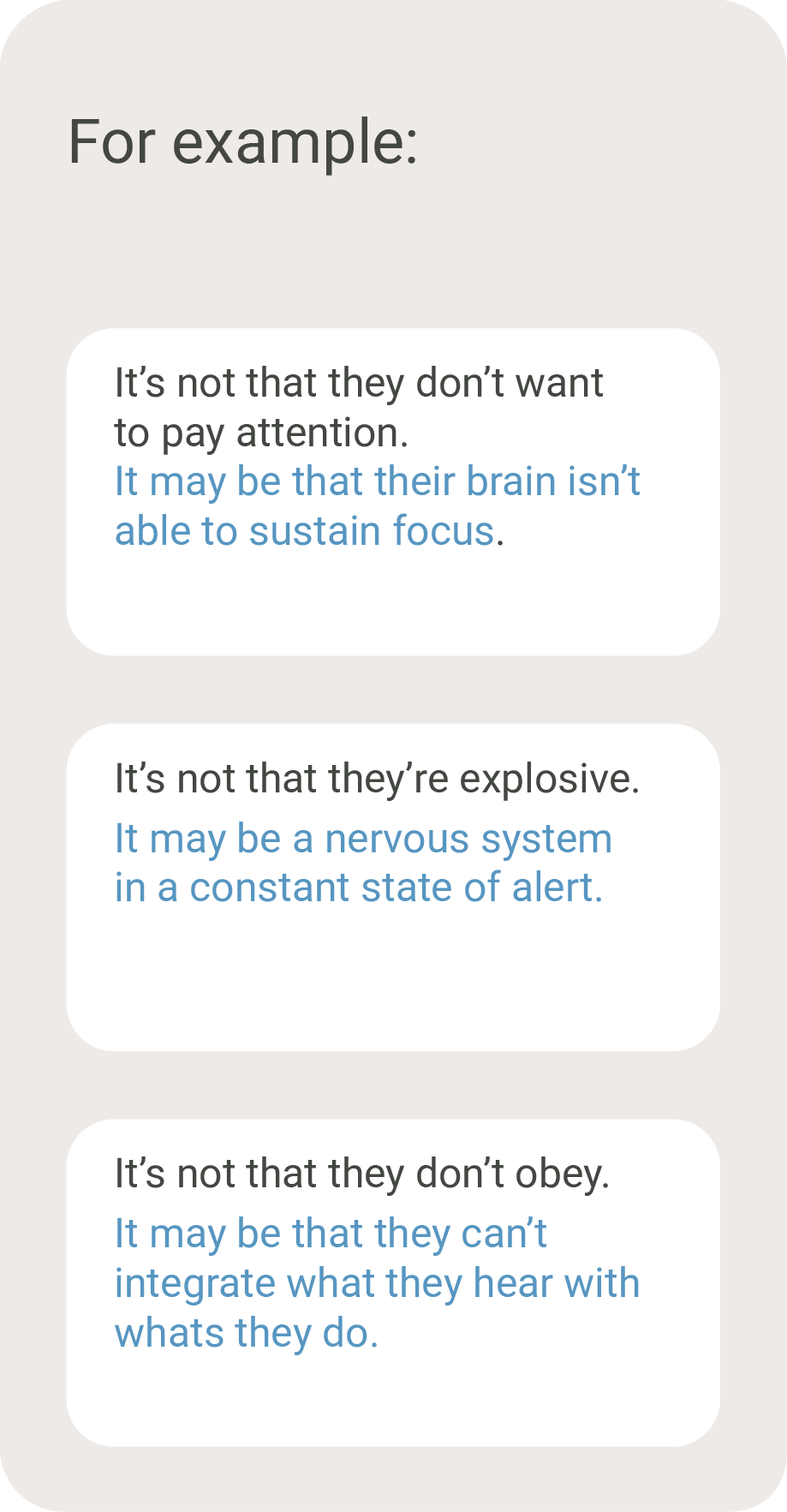
It’s not that your child doesn’t want to;
their brain may not be ready to do better.

The Melillo Method

It’s not that your child doesn’t want to; it’s just that, right now, their brain isn’t capable of doing any better.
It’s a way to help the brain organize itself more effectively, so that many of the challenges children face today can begin to be overcome more easily.

Who is it for?

The most important thing is to understand whether there are aspects of the nervous system that can be strengthened to improve its functioning.
This is not a journey you have to take alone. It can make a difference in your child’s life and your family’s life.

About Us

A place to learn what’s really going on with your child.
Licensed Melillo Method Center, Mexico City
At Neuren, we support children and families through a new approach to understanding child development, placing the nervous system at the center as the foundation of everything.
We know that many families come to us after having tried different options, with doubts and a need to understand what is happening with their child.
In many cases, there is progress, but not always a change that ultimately makes sense on a deeper level. Neuren is a space where we focus on the proper development of children’s nervous systems—not just on what we observe in their behavior. When we address the root causes, we open the door to more profound changes that enable children to learn, interact, and integrate more effectively into their daily lives.
To achieve this, we use a neurodevelopmental approach developed by Robert Melillo over 30 years ago, which stems from a different way of understanding child development.
Our approach does not seek quick fixes, but rather a deeper understanding that allows us to support each child more precisely and helps families make clearer decisions.

Our Credentials

Dr. Robert Melillo

We are the only licensed Melillo Method Center in Mexico, authorized and supervised by Dr. Robert Melillo, operating in accordance with the method’s international guidelines. This allows us to offer a structured program, based on years of experience, to children and families around the world.

Learn more

Schedule a call to discuss your case
1
The starting point
A nervous system that is not functioning in an integrated way.
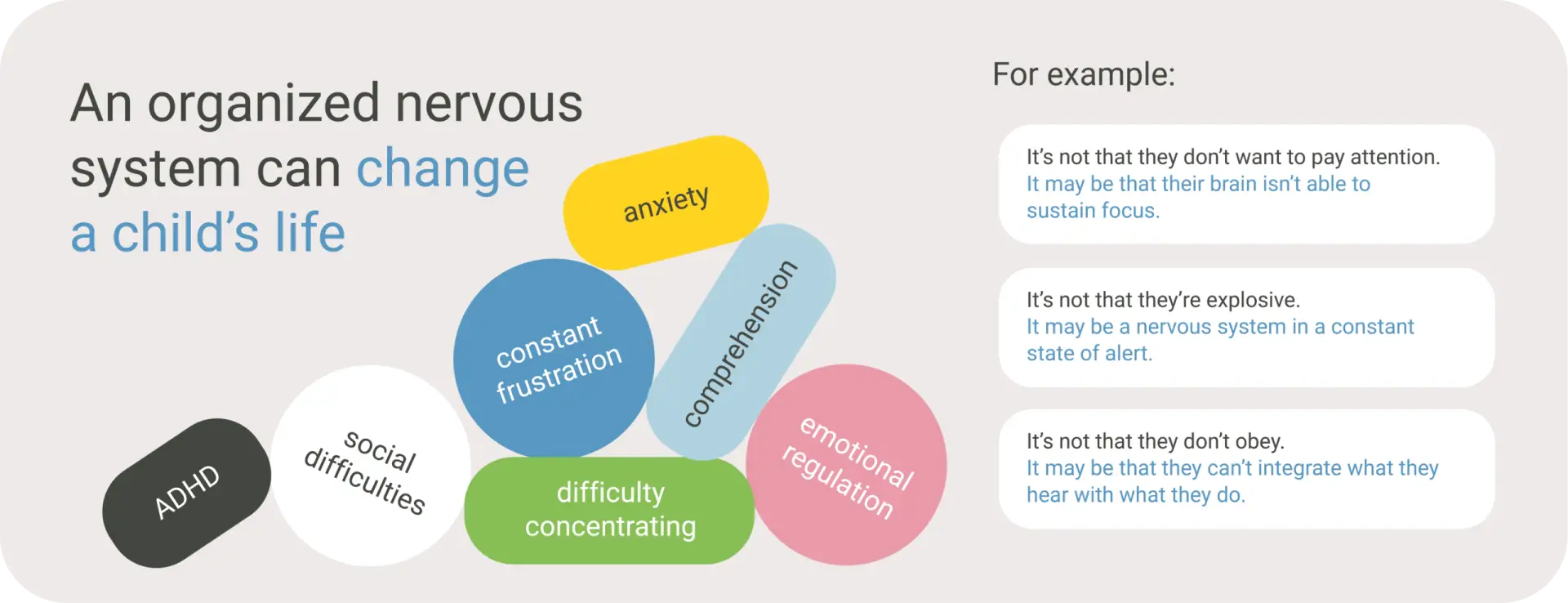
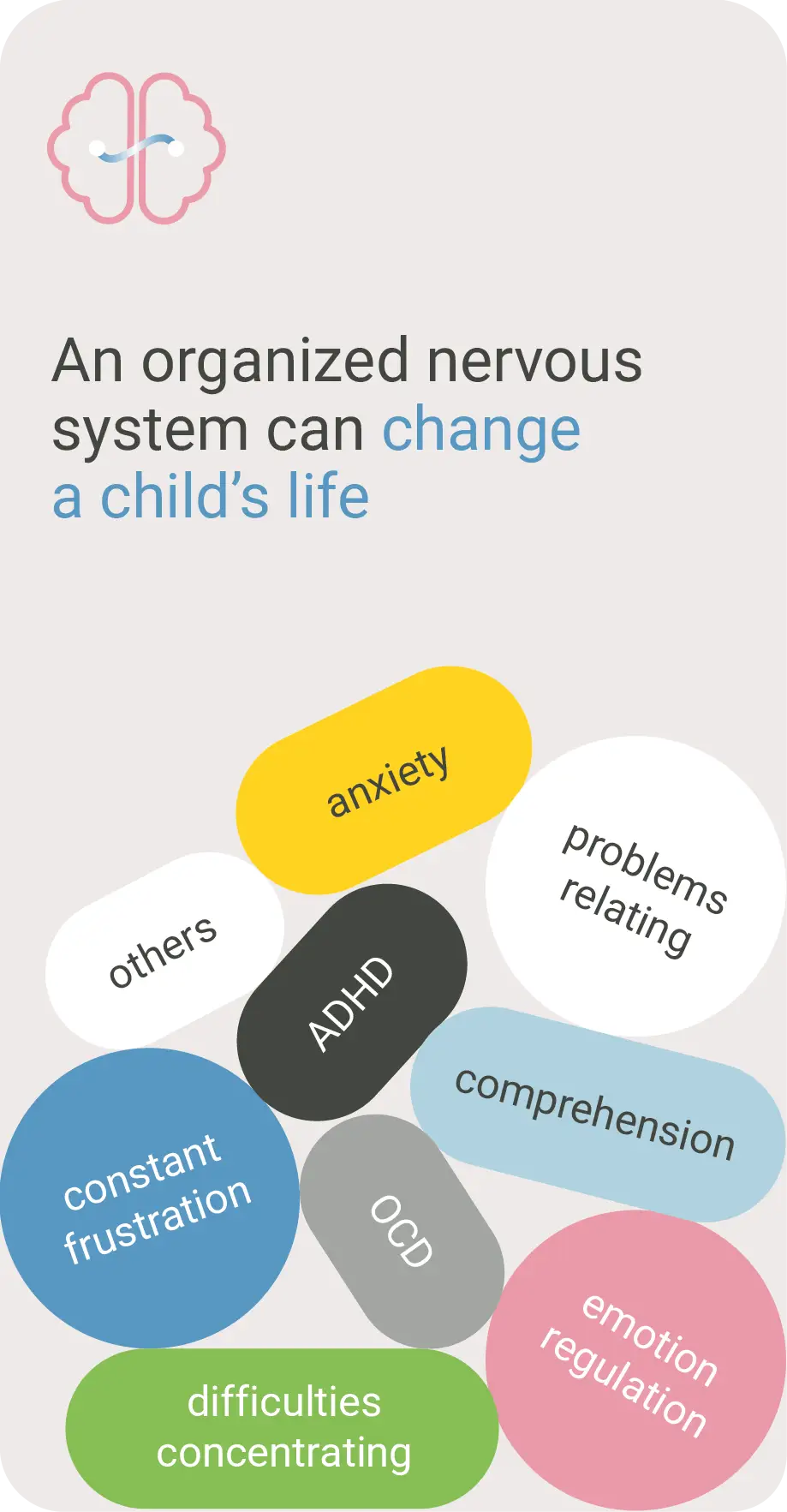
Many children who struggle with focus, emotional regulation, or learning do not have a behavioral problem.
They have a nervous system that is not functioning in an integrated way.
What does it mean for the nervous system to be “not integrated”?
For a child to focus, self-regulate, and learn, different parts of the brain need to communicate efficiently with one another.
2
The Melillo Method
A neurodevelopmental therapeutic approach, non-invasive and free of pharmaceutical medication.
The Melillo Method is a non-invasive neurodevelopmental therapeutic approach, free of pharmaceutical medication.
A different starting point
Many of the challenges we see in children are not only explained as behavioral issues, learning difficulties, or emotional concerns, but rather by how their nervous system is organized.
The behaviors that raise concern—at home, in school, or in clinical settings—do not appear in isolation. They are often the expression of a nervous system that is not functioning in a balanced way.
The Melillo Method focuses on two key areas:
  • Balancing the brain’s hemispheres so they can communicate and work in coordination.
  • Integrating primitive reflexes, which are the foundational building blocks for many aspects of development.
3
A shift in approach
An organized nervous system improves behavior, attention, and emotional regulation.
This is not about correcting the child.
Many approaches aim to change behavior. But when the foundation—the nervous system—is not addressed, changes tend to be limited or temporary.
This approach proposes something different
When the brain and body are not working in coordination, the nervous system may enter states of alertness, disorganization, or overload. This often shows up as challenges in behavior, attention, or emotional regulation.
When the nervous system is regulated through neurological rhythm, coordination, movement, and sensory integration—prioritizing organization over control—behavior begins to shift naturally.
As the nervous system becomes more organized, behavior, attention, and emotional regulation improve as a natural outcome. The goal is not to suppress symptoms, but to reduce the biological need of the nervous system to produce them.
4
How we work
The goal is to identify functional neurological imbalances and address the root cause behind them.
The objective of the method is to identify functional neurological imbalances and work directly on their root cause. This is achieved through structured programs that stimulate neuroplasticity—the brain’s ability to reorganize, strengthen, and develop more balanced patterns of functioning.

The process begins with an individualized assessment, from which specific interventions are designed for each child, recognizing that every child has a unique developmental history.

Based on this evaluation, different therapeutic tools are integrated to stabilize and stimulate specific areas of the brain according to each child’s needs.
These may include:
  • Targeted brain stimulation based on the assessment.
  • Physical exercises to promote movement.
  • Primitive reflex integration work.
  • Emotional support for families.
  • Nutritional consultation and academic support.
This approach has been used with thousands of patients and implemented in clinics across the United States, Europe, and Asia, following the model developed by Dr. Robert Melillo.
5
What can I expect?
To support better balance between the brain’s hemispheres and help regulate the nervous system.
Therapeutic work is aimed at supporting better balance between the brain’s hemispheres and regulating a nervous system that, in many cases, has been operating for long periods in states of alert or survival. The goal is to gradually guide it toward a more organized and coherent way of functioning.

Each process respects the individual pace of every child, recognizing that neurological reorganization happens gradually and differently in each case.
As the brain begins to integrate and organize, functional changes are
often observed, such as:
  • Improved attention and focus
  • Greater cognitive and behavioral flexibility
  • Significant improvements in language
  • Better quality and depth of sleep
  • Progress in motor and social skills
  • Increased tolerance to frustration
  • Stronger connection and engagement with the environment
  • Reduction in emotional outbursts
Behavior is not forced. It improves naturally as the nervous system becomes more organized and regulated.
These changes are not only seen in the child, but also within their environment—positively impacting family dynamics through greater understanding, stability, and overall well-being.